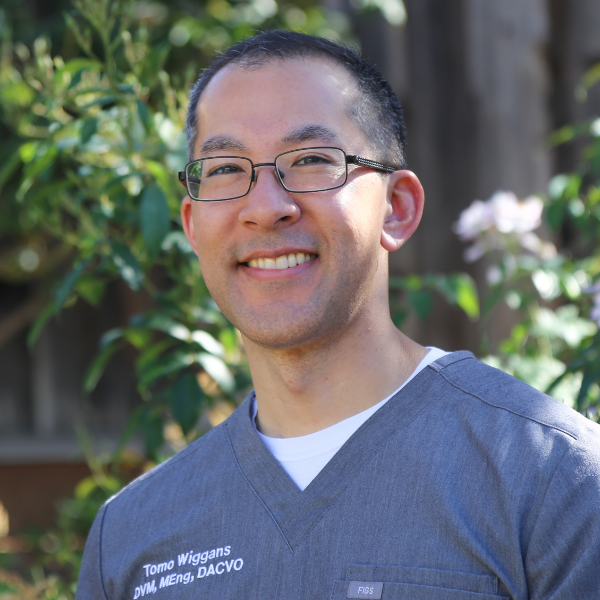
Dr. Tomo Wiggans attended Cornell University, earning a Bachelor of Science in 2001 followed by a Master of Engineering in 2002. He worked as an engineer for several years before changing course to pursue veterinary medicine. He attended veterinary school at UC Davis, graduating in 2010. Dr. Wiggans then went on to complete a rotating internship and specialty fellowship at Colorado State University before completing a three-year residency in comparative veterinary ophthalmology at UC Davis. He became board-certified in 2015. Dr. Wiggans currently works at Sage Veterinary Centers in Concord, California.
Small Animal Medicine 2
Ophthalmology
Sunday, June 21, 2026
8:00 AM–9:15 AM
“It’s All Fun and Games Until…”: Managing Ocular Trauma
Trauma to the eye can range from minor cosmetic damage to the eyelids to irreversible damage to the intraocular structures. So which eyes are the ones that can be saved, and which ones are best removed? In this lecture we will cover examination tips to help you assess the viability of the traumatized eye, what prognostic indicators are known, and how best to manage these patients on your own or until they can be referred to a specialist.
9:25AM–10:40AM
What Am I Looking at? A Case-Based Approach to Understanding the Corneal Examination
The cornea is one of the most commonly affected ocular tissues in veterinary ophthalmology. Knowledge of corneal pathology is important for determining the underlying disease process and whether the changes are the result of primary corneal disease or secondary to other ocular surface or intraocular disease. In this lecture, we will use specific case examples to interpret corneal changes and implement the optimal diagnostic and treatment plan.
10:50 AM–12:05 PM
Putting the “Fun” Back in Fundus: Diseases of the Posterior Segment
A thorough fundic examination is an important part of evaluating animals with vision loss or systemic disease. However, challenges in performing and interpreting the fundic examination may act as obstacles in determining causes of blindness. In this discussion, we will review the anatomy of the ocular fundus, describe different fundus examination techniques and technology, explain how to interpret changes in the appearance of the fundic structures, and put these into context with the diagnosis and management of common retinal diseases in dogs and cats.

View All Speakers | Discover More Below