

Hours: Friday (June 19) & Saturday (June 20) 10:45 AM to 4:15 PM

Two complimentary lunches included, keeping you refreshed and ready to make the most of the event. Snacks are also provided during breaks.

Complete with engaging sport activities, making it a central hub of entertainment.

Visit all exhibitors on this year’s June Madness game and secure a higher chance of winning a raffle prize.

Get a chance at winning prizes!

Step into the new DemoZone at the Vet Expo and see innovation in action! This demonstration space features 15- and 30-minute live sessions where leading companies showcase new devices, techniques, and hands-on solutions in real time. Whether you’re looking to explore the latest technology, sharpen your skills, or experience products up close before making decisions, the DemoZone delivers interactive learning you won’t get from a booth alone. Stop by, ask questions, and discover what’s possible!
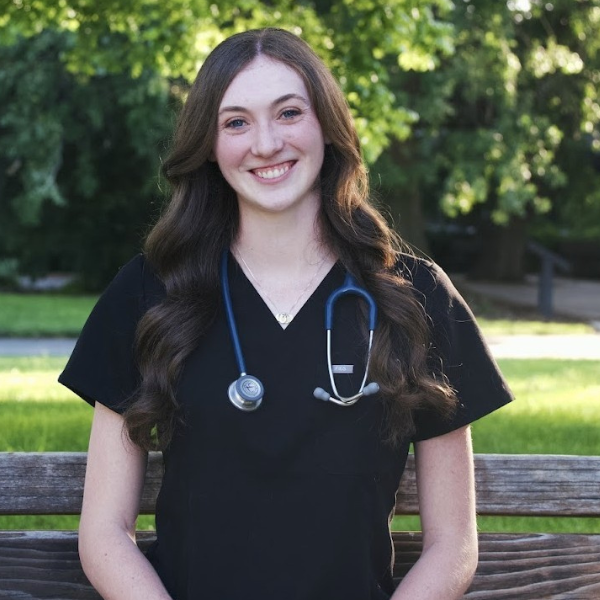
UC Davis Weill School of Veterinary Medicine Class of 2027
Nicole Hensley is a Class of 2027 veterinary student at UC Davis with an exceptional academic record and a passion for small animal and equine neurology. Her research focuses on postoperative infection risk factors in craniectomy patients, reflecting her interest in evidence-based surgical outcomes and novel studies. She has extensive leadership and service experience, while actively competing as an equestrian across the nation. Nicole plans to pursue a small animal rotating internship followed by a neurosurgery residency after graduation.
Topic: A Retrospective Comparison of Postoperative Infection Rates in Veterinary Craniectomy Patients Receiving Polymethylmethacrylate or Titanium Mesh Implants
Postoperative infection is a significant complication of neurosurgical procedures; however, infection rates and associated risk factors following veterinary craniectomy remain poorly characterized. This retrospective study compares postoperative infection rates in veterinary patients undergoing craniectomies with reconstruction using either polymethylmethacrylate (PMMA) or titanium mesh implants. Medical records were reviewed to evaluate patient signalment, underlying pathology, surgical and perioperative variables, and postoperative outcomes. Multivariable statistical analyses were performed to identify risk factors associated with postoperative infection. By providing one of the first comparative assessments of implant-associated infection risk in veterinary craniectomy patients, this study aims to inform implant selection, optimize perioperative management, and contribute foundational data to an understudied area of veterinary neurosurgery.
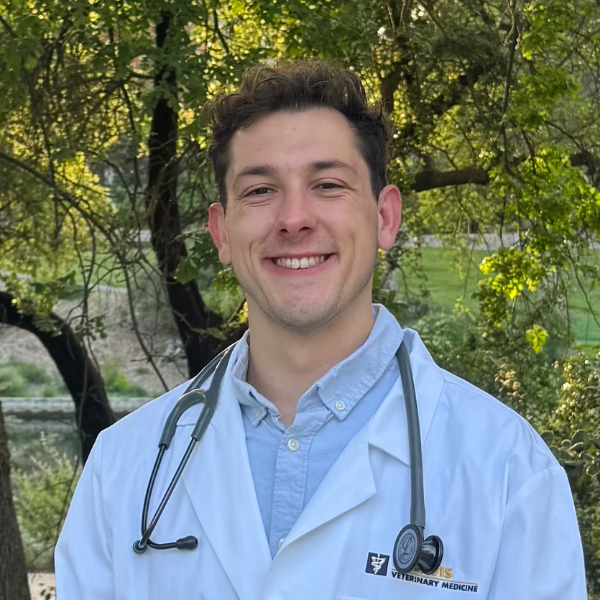
UC Davis Weill School of Veterinary Medicine Class of 2028
Bryan Huseman is a second-year veterinary student at UC Davis who is set to graduate in 2028. He has lived in California most of his life and obtained a bachelor’s degree in biochemistry from California State University, Northridge. His primary focus is small animal with particular interest in radiation oncology, a field in which he hopes to specialize and continue to research.
Topic: CT Volumetric Analysis Quantifies Canine Oral Melanoma Size and Bone Involvement to Aid in Prognostication
The study examined the role of CT-based tumor measurement in aiding prognostic staging of canine oral melanoma. Tumor size was assessed using volumetric analysis and longest diameter, along with evaluation of bone lysis, a negative prognostic factor not currently included in WHO staging. Using contour-based imaging software (MIM Maestro®), contrast-enhanced CT scans allowed precise delineation of tumors and quantification of bone involvement, improving accuracy over clinician-recorded measurements. CT measurements revealed stage migration in over 50% of cases compared with medical records. These findings suggest that clinical measurements may underestimate disease extent and highlight the need for CT-based staging and standardized lymph node assessment.
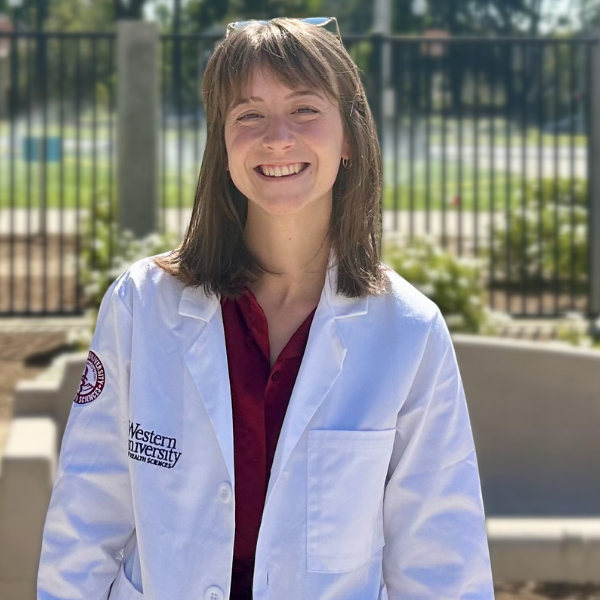
Western University College of Veterinary Medicine Class of 2028
Gretchen Andreasen is a veterinary student in the Western University Class of 2028. Prior to veterinary school, she attended the University of Notre Dame for her bachelor’s and master’s degrees in biology. She intends to pursue zoo or shelter/community medicine and is interested in conducting research as a clinician. Her current work on accessibility is inspired by her background in rural medicine and experience coordinating two Steet Dog Clinics at WesternU in 2025.
Topic: Veterinary Care Deserts: Evaluating Availability
Disparities in access to veterinary care is a significant issue facing our profession. Identifying care deserts—areas experiencing barriers to accessing veterinary services—is the first step in combating this inequality. An existing definition uses three metrics to identify care deserts: accessibility, affordability, and availability. Quantifying the availability metric has proven to be particularly difficult. This project seeks to estimate the availability of veterinary care in San Diego County using multiple data sources. Two types of publicly accessible data were recorded: 1) professional licenses and 2) personnel data available on clinic websites. Additionally, we distributed a survey to clinics in San Diego County requesting data on the veterinary professionals at each facility. Preliminary analyses have compared each data source’s availability metric, with the ultimate goal of creating a standardized tool for veterinary care service providers to identify communities in need.
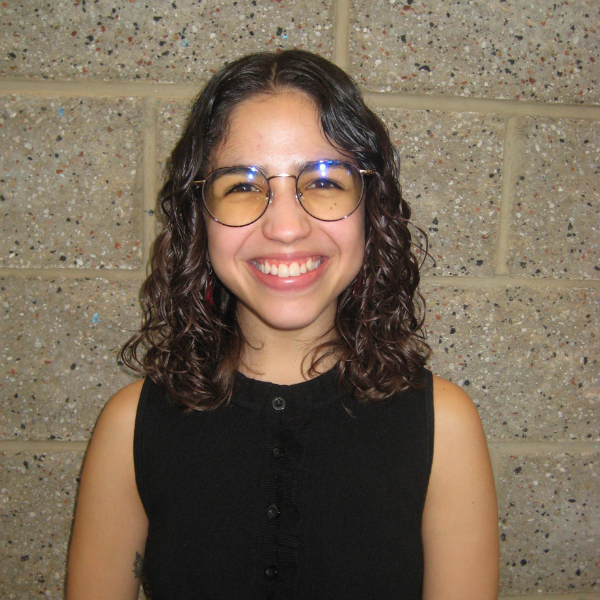
UC Davis Weill School of Veterinary Medicine Class of 2028
Anayra Tirado-Colón is a second-year veterinary student at UC Davis Weill School of Veterinary Medicine who is originally from Puerto Rico. Their interests include livestock, food animal, and laboratory animal medicine, with an emphasis on research. Their current work evaluates continuous glucose monitoring systems in adult sick goats and sheep, and they aspire to contribute to research initiatives focused on animal welfare and public health.
Topic: Evaluating a Continuous Glucose Monitoring System in Adult Sick Goats and Sheep
We enrolled sheep and goats that would benefit from the continuous glucose monitoring system (CGMS). The device was placed on the animals, and blood samples were collected every eight hours alongside CGMS readings. Samples were analyzed for glucose by the reference method, a chemistry analyzer. Our findings show that the CGMS meets criteria for clinical accuracy. However, for analytical accuracy, the CGMS and reference method are not sufficiently similar, so analytical accuracy is not met.
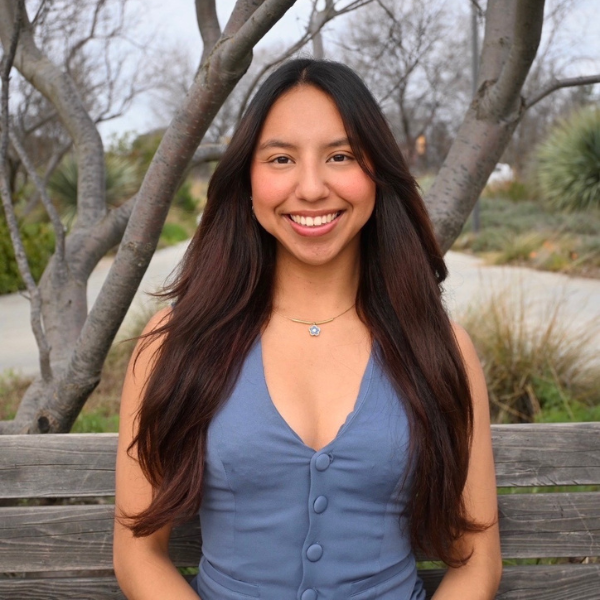
UC Davis Weill School of Veterinary Medicine Class of 2028
Arely Yessenia Navarro is a first-generation Hispanic student from Southern California at the UC Davis Weill School of Veterinary Medicine who is expected to graduate in 2028. She serves as president of UC Davis Student American Veterinary Medical Association and is passionate about problem-solving, research, and mentorship. She participated in the STAR program during the summer of 2025 and is tracking to focus on small animal medicine with a specialty in veterinary ophthalmology.
Topic: Determining the Tolerability and Anti-Inflammatory Effect of Andrographolide in a Dry Eye Disease Mouse Model
Dry Eye Disease (DED) affects millions of Americans and is characterized by chronic surface inflammation. Current anti-inflammatory treatments, including corticosteroids, are effective but associated with adverse side effects, highlighting the need for safer alternatives. Andrographolide (ANDRO), a natural inhibitor of NF-κB activation, was evaluated for safety and efficacy as a topical therapy in a DED model. Safety was assessed using toxicity scoring, demonstrating that ANDRO was well tolerated up to 500 µM, while higher doses caused ocular discomfort. Efficacy was evaluated in Awat2 knockout mice by measuring corneal epithelial mRNA expression of pro-inflammatory cytokines. ANDRO treatment reduced IL-1β expression compared with vehicle controls. These findings support ANDRO as a promising non-steroidal therapeutic for DED in both human and veterinary medicine.

UC Davis Weill School of Veterinary Medicine Class of 2028
Jillyan Tang is a second-year student at the University of California Davis Weill School of Veterinary Medicine graduating in 2028. At UC Davis, she has had the opportunity to coordinate an access-to-care clinic, manage events that expose students to different specialties, and dive further into clinical research. These experiences have culminated in her aspirations to pursue small animal medicine with an interest in ophthalmology.
Topic: The Role of MITF in the Ocular and Pigmentation Phenotypes of Italian Greyhounds
My project investigated whether a Short Interspersed Element (SINE) insertion in the Microphthalmia-associated transcription factor (MITF) gene influences both coat pigmentation and ocular development in Italian Greyhounds. Given that MITF regulates melanocyte and retinal pigment epithelium differentiation, and mutations in other species cause hypopigmentation and eye defects simultaneously, we hypothesized that the MITF SINE insertion would be associated with increased white coat spotting and developmental ocular abnormalities. To test this hypothesis, we evaluated 304 Italian Greyhounds for the extent of white patterning using standardized photographic scoring (0–6) and genotyped 281 dogs for the MITF SINE insertion using the UC Davis Veterinary Genetics Laboratory panel. In parallel, 37 dogs underwent complete ophthalmic examinations, including slit lamp biomicroscopy and indirect ophthalmoscopy, to identify developmental ocular lesions. Statistical associations between genotype and coat color were assessed using Fisher’s Exact Test.