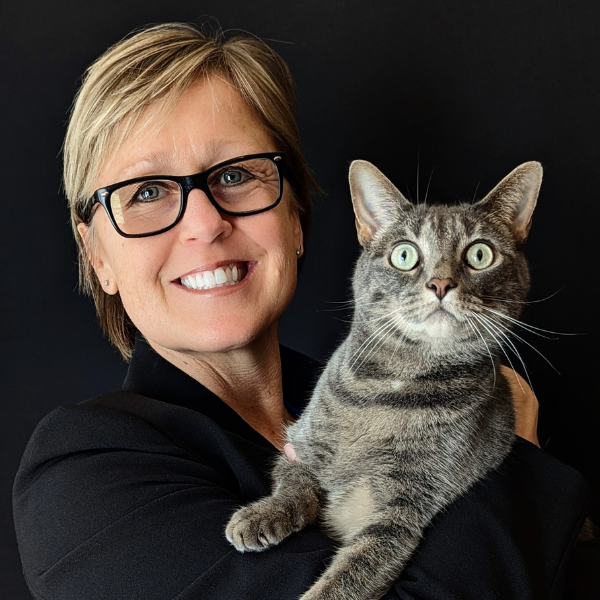
Dr. Marie Hopfensperger is a board-certified veterinary behaviorist whose areas of clinical expertise include sedation of fearful and fractious companion animals, behavioral pharmacology, canine and feline aggression, and feline inappropriate urination. Dr. Hopfensperger received her DVM degree from Michigan State University and MBA from Central Michigan University. She served as an assistant professor at the Michigan State University College of Veterinary Medicine for more than a decade and was honored to have been named MSU’s Zoetis Distinguished Veterinary Teacher of the Year in 2021. Dr. Hopfensperger was the first veterinarian ever to be selected as Robert Wood Johnson Clinical Scholars Fellow.

1:55 PM–2:55 PM
Gray Matters: Practical, Multimodal Management of Cognitive Dysfunction Syndrome in Dogs and Cats
Cognitive Dysfunction Syndrome (CDS) is a progressive neurobehavioral disorder of aging dogs and cats that is frequently underdiagnosed and often undertreated. Clinical signs are commonly multifactorial and require a whole-patient approach. This clinically focused session will provide practical guidance for implementing treatment strategies in everyday practice. A multimodal approach will be discussed including cognitive-brightening agents, neuroprotective diets, management of agitation and sundowning, and sleep–wake cycle normalization. Equally important, this lecture emphasizes comprehensive geriatric assessment. Comorbid conditions—including chronic pain, mobility changes, and systemic hypertension—may mimic, worsen, or complicate CDS. Participants will leave with a practical approach to improving quality of life for aging patients and their caregivers.
3:05 PM–4:05 PM
Bridging the Gap: Stabilizing Complex Behavior Cases When Specialty Care Is Out of Reach
Behavioral cases do not pause while clients wait months for specialty appointments—or when referral is financially or geographically impossible. In these situations, primary care teams are often called upon to intervene. This interactive, case-based session will walk through real-world canine and feline presentations commonly encountered in practice, including inter-cat aggression, feline inappropriate urination, canine aggression toward people and other dogs, separation anxiety, and noise phobia. We will review simple management plans and rational psychopharmacology to stabilize cases safely and effectively. The session will also outline strategies for collaborative care, including virtual vet-to-vet consultation, telehealth resources, and curated educational tools. Participants will leave with increased confidence in managing complex behavioral cases—ensuring patients receive timely, compassionate, and competent care even when specialty access is limited.
4:15 PM–5:30 PM
I Really Don’t Wanna Get Bit Today: Practical Strategies for Fractious Patients
Fear, anxiety, and stress (FAS) are common during veterinary visits, and high-FAS patients present real risks to staff safety, diagnostic quality, and patient welfare. While oral pre-visit pharmaceuticals are valuable tools, they are not always sufficient. This clinically focused session provides practical, real-world strategies for balancing safe handling and a welfare-centered approach. Sedation protocols, combination strategies, route selection, monitoring considerations, and recovery planning will be discussed. Emphasis will be placed on minimizing distress, reducing risk, and improving long-term patient outcomes. Participants will leave with actionable sedation algorithms, increased confidence in decision-making under pressure, and practical techniques to protect both their team and their patients.
1:30 PM–2:30 PM
Bittersweet Goodbye: A Real-World and Empathetic Approach to Behavioral Euthanasia
Behavioral euthanasia remains one of the most emotionally complex and ethically charged decisions in veterinary medicine. Unlike physical disease, behavioral disorders challenge traditional quality-of-life tools, introduce public safety concerns, and often carry stigma—for clients and clinicians alike. This session introduces a practical, compassionate framework for navigating behavioral euthanasia through a One Welfare lens, recognizing the interconnected well-being of patients, caregivers, veterinary teams, and the broader community. Attendees will learn how to conduct structured aggression risk assessments, evaluate caregiver burden, support clients through anticipatory grief, and implement sedation and euthanasia protocols tailored for anxious or aggressive patients. Grounded in current evidence and real-world clinical experience, this talk equips veterinarians with the language, structure, and confidence to guide families through one of the most difficult decisions they will ever face—while safeguarding human safety, animal welfare, and veterinary team well-being. If you routinely manage behavior cases, field difficult euthanasia conversations, or want a clearer ethical and clinical roadmap for these cases, this session is not to be missed.
2:40 PM–3:40 PM
Beyond Fluoxetine: Multimodal Medication Strategies for Canine Behavior
Fluoxetine is an excellent first-line therapy—but many canine behavior cases require more. This session explores strategic, mechanism-based polypharmacy for anxiety, aggression, fear, and hypervigilance in dogs. Learn when to switch SSRIs, when to augment instead of replace, and how to thoughtfully combine serotonergic, noradrenergic, and anxiolytic agents for synergistic effects. We’ll review practical medication algorithms, fight-or-flight attenuation strategies, PRN planning, and how to tailor protocols to individual behavioral phenotypes. Attendees will leave with a clear, evidence-informed roadmap for building balanced, multimodal treatment plans with greater confidence and clinical precision.
4:15 PM–5:30 PM
Beyond Fluoxetine: Multimodal Medication Strategies for Feline Behavior
Fluoxetine is often the first stop in feline behavioral medicine—but it should not be the last. Many cats experience incomplete response or adverse effects despite appropriate SSRI therapy. This session moves beyond one-drug thinking and into strategic, mechanism-based pharmacology for anxiety, aggression, and inappropriate urination. Attendees will learn a practical three-pronged model that makes polypharmacy less intimidating and truly feasible in feline patients. Grounded in clinical experience, this talk provides immediately applicable strategies. You’ll leave with a clearer pharmacologic roadmap and the confidence to build rational polypharmacy plans safely and effectively. If you’ve ever felt stuck after fluoxetine, this session will expand your toolbox.
View All Speakers | Discover More Below