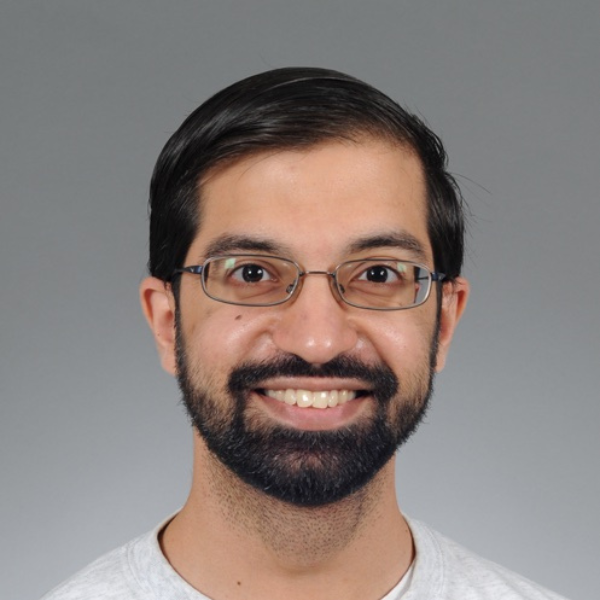
Vishal Murthy, DVM, DACVIM (Neurology)

Dr. Vishal Murthy is an assistant professor of clinical neurology/neurosurgery at UC Davis. His clinical and research interests include applied neuroanatomy and biomarkers of neural function, exotic animal neurology, and neurology education. He also enjoys using his artistic side to educate through medical illustrations. Originally from Toronto, Canada, Dr. Murthy graduated from the Ontario Veterinary College and completed his residency in neurology and neurosurgery at UC Davis.

Track

Small Animal Surgery

Topic

Neurosurgery

Day

Saturday, June 20, 2026

Speaking Schedule

Saturday, June 20, 2026

2:40 PM–3:40 PM

The Truth Behind “Slowing Down”: Orthopedic and Neurological Diseases in Geriatric Dogs and Cats (with Dr. Po-Yen Chou)

Dogs and cats often “slow down” with age, from orthopedict to neurological issues. However, teasing apart orthopedic from neurologic causes of gait changes can be challenging—especially when both are present. This talk reviews a systematic approach to evaluating the geriatric patient, emphasizing gait assessment, neurologic screening, localization, and recognition of common orthopedic and neurological diseases. We will outline a practical, stepwise diagnostic strategy suitable for general practice, with indications for advanced imaging in complex cases. Finally, we will discuss multimodal management options, to optimize comfort and quality of life in aging pets.

4:15 PM–5:30 PM

Canine Intervertebral Disc Disease in 2026: Updates to Pathophysiology, Prognosis, and Practical Decision-Making

This session reviews canine intervertebral disc disease (IVDD), integrating recent advances in classification, prognosis, and treatment to guide real-world clinical decisions in general and referral practice. Contemporary classification schemes of disc related spinal injury in dogs will be reviewed to explain how pathophysiology drives clinical presentation and imaging findings. Building on this, we will discuss evidence comparing medical and surgical management and prognostic counseling, with a view on neurologic grade, lesion type, and emerging biomarkers. This talk will also address the latest on progressive myelomalacia and recent changes in practice trends. Throughout, emphasis will be placed on practical algorithms for veterinary practitioners—when strict rest and analgesia are reasonable, when to push for urgent advanced imaging and referral, how to monitor for myelomalacia, and how to communicate a realistic but hopeful prognosis grounded in the last decade of IVDD research.

View All Speakers | Discover More Below